

Understanding In-Unit Laundry vs. On-Site Facilities
When you are searching for a new place to live, understanding the exact terminology used in rental listings will save you time and frustration. A property listing might highlight "laundry," but that term can mean drastically different living experiences.
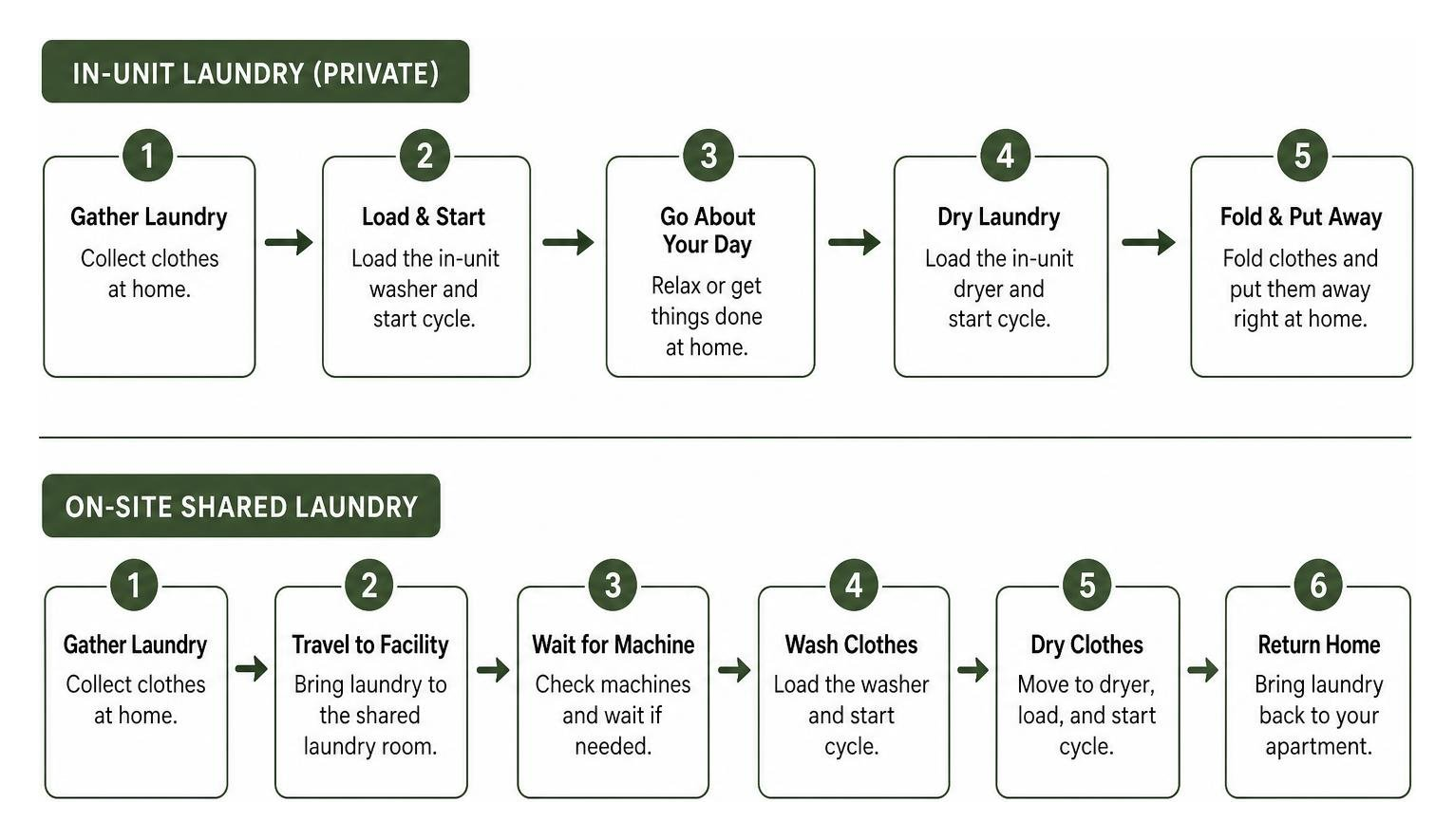
Having an in-unit washer dryer means the machines are located directly inside your private living space—typically enclosed within a closet, tucked into a bathroom nook, or built into a dedicated utility room. You can learn more about these options by exploring Apartments with In-Unit Laundry.
Defining Private Laundry Access
Private in-unit appliances belong exclusively to your rental residence during your lease term. This setup delivers unmatched home convenience:
- Exclusive Usage: You never have to worry about a neighbor leaving their wet clothes in the drum for hours or taking your freshly dried garments out to use the machine.
- Flexible Timing: You can wash a single shirt at 10:00 PM or throw in bed linens early on a Sunday morning without leaving your apartment.
- Seamless Convenience: You can use your washing machine as a hamper, tossing dirty clothes directly into the wash drum as you go.
Comparing On-Site Community Facilities
On-site laundry facilities, by contrast, mean the property features a shared laundry room located in a common area, basement, or central courtyard. While this is better than trekking to a public laundromat down the block, it introduces several micro-frustrations:
- Scheduling Conflicts: You have to compete with other residents for open machines, especially during peak weekend hours.
- Floor Travel: Doing laundry requires lugging heavy baskets up and down stairwells, through long hallways, or into elevators.
- Payment Hassles: Shared facilities often rely on coin-operated units, smart card systems, or smartphone apps that require continuous refilling.
Pros and Cons of In-Unit Laundry Apartments
Deciding to prioritize in-unit laundry apartments requires balancing daily lifestyle conveniences against tangible utility usage and spatial factors.
While having private appliances brings ultimate convenience, running an in-unit washer or dryer will reflect directly on your monthly water and electric power bills. Running an in-unit washer or dryer twice a week typically adds a modest increase to your routine utility expenses.
If you have an active lifestyle or family needs where you end up doing laundry every single day—a habit reported by 31% of people—having in-unit appliances will lead to higher overall utility consumption. However, for many renters in cities like Chicago, the privacy and time saved make this trade-off worthwhile. Check out local rental options at Chicago Apartments with Laundry.
| Factor | In-Unit Laundry Apartments | Shared On-Site Facilities |
|---|---|---|
| Convenience | Maximum (wash anytime inside your apartment) | Moderate (must travel to common area) |
| Privacy | Complete privacy for sorting and folding | Public setting around neighbors |
| Operation | On-demand access inside unit | Scheduled trips to common areas |
| Utility Impact | Reflected in monthly electric/water bills | Included in building utilities or pay-per-use |
| Space | Consumes interior closet/floor space | Zero impact on apartment square footage |
| Maintenance | Handled via property management request | Handled by third-party vendor/landlord |
Time-Saving and Convenience Benefits
The primary advantage of private appliances is saving your precious free time. Instead of dedicating an entire Saturday afternoon to sitting in a shared laundry facility monitoring your clothing, you can start a load while cooking dinner, working from home, or catching up on your favorite show.
Privacy is another massive benefit. You can sort delicates, fold garments, and treat stains without strangers walking past. Furthermore, having immediate access to your own private machines eliminates the risk of clothing being stolen, misplaced, or damaged by bleach residues left behind by previous users.
Practical and Spatial Trade-Offs
Despite the undeniable perks, private appliances come with a few trade-offs:
- Base Rent Differences: Units equipped with private washers and dryers generally command higher base monthly rent compared to standard units without in-unit amenities.
- Loss of Square Footage: In smaller floor plans, a laundry closet takes up floor space that could otherwise serve as a pantry, entryway coat closet, or storage nook.
- Utility Consumption: You are directly responsible for the water heating and electrical power consumed during washing and drying cycles.
7 Actionable Tips to Find Modern Rental Units

Finding the right rental requires a strategic approach, especially in competitive urban markets. Follow these proven steps to secure your ideal living space equipped with private laundry facilities.
Tip 1: Filter Search Listings and Verify Appliance Inclusions
When browsing apartment portals, always apply search filters specifically for "In-Unit Washer & Dryer." Be careful not to select generic filters like "Laundry On-Site" or "Laundry Facilities," which will return properties with shared basement facilities.
Always check the description fine print to distinguish between provided appliances and simple hookups. You can view dedicated options across Chicago In-Unit Laundry Apartments and browse listings featuring a Washer Dryer In-Unit.
Tip 2: Understand Appliance Styles (Stackable vs. Side-by-Side)
Pay attention to the physical configuration during virtual or in-person tours:
- Stackable Units: Common in modern urban high-rises and renovated historic spaces. They maximize vertical height while minimizing floor footprint.
- Side-by-Side Units: Found in larger two- or three-bedroom layouts, offering full-capacity washing for bulky bedding and heavy loads.
- Washer/Dryer Combos: All-in-one ventless units that wash and dry in a single drum. They save space but often require longer dry cycles.
Tip 3: Look for Energy Efficient Communities
Choose apartment communities featuring updated, high-efficiency equipment. Communities designed around sustainable design—such as those featuring ENERGY STAR rated appliances or green building standards—help reduce overall water consumption and keep monthly utility power expenses manageable.
Tip 4: Leverage Rental Market Seasonality
Time your apartment search strategically based on your ultimate goals:
- Winter Leasing (Late Fall to Winter): Rental demand is lower during colder months. Landlords are often more open to flexible lease terms and move-in schedules on high-demand units.
- Summer Leasing (Spring to Summer): Inventory peaks during warmer weather. While competition is higher, you will find the largest selection of available layouts featuring private laundry setups.
Tip 5: Request Full Disclosure of Itemized Monthly Fees
Modern leasing structures often include mandatory add-on costs alongside base rent. When calculating your total living expenses, ask the leasing team for a complete breakdown of mandatory monthly charges, which may include doorstep service, building amenity fees, internet packages, and utility administrative handling costs. Combining base rent with mandatory monthly fees yields your true total leasing price.
Tip 6: Review Maintenance Policies Before Signing
Before signing a lease agreement, ask how repair ticket turnarounds are handled for private appliances. Clarify whether the property management team has in-house maintenance technicians or contracts with third-party vendors for appliance service requests.
Tip 7: Tour the Apartment and Inspect the Units in Person
Never sign a lease without confirming the condition of the laundry setup. During your walk-through:
- Open the washer drum to check for cleanliness and pleasant odors.
- Verify that the lint trap in the dryer is clean and undamaged.
- Ensure the surrounding closet space provides adequate ventilation and lighting.
Maintenance Responsibilities and Lease Agreements
When you have a washer and dryer inside your apartment home, clear lines of responsibility ensure smooth living. For a detailed look at lease terms, check out the Apartments In-Unit Laundry Complete Guide and our specialized Studio Apartment Laundry Complete Guide.
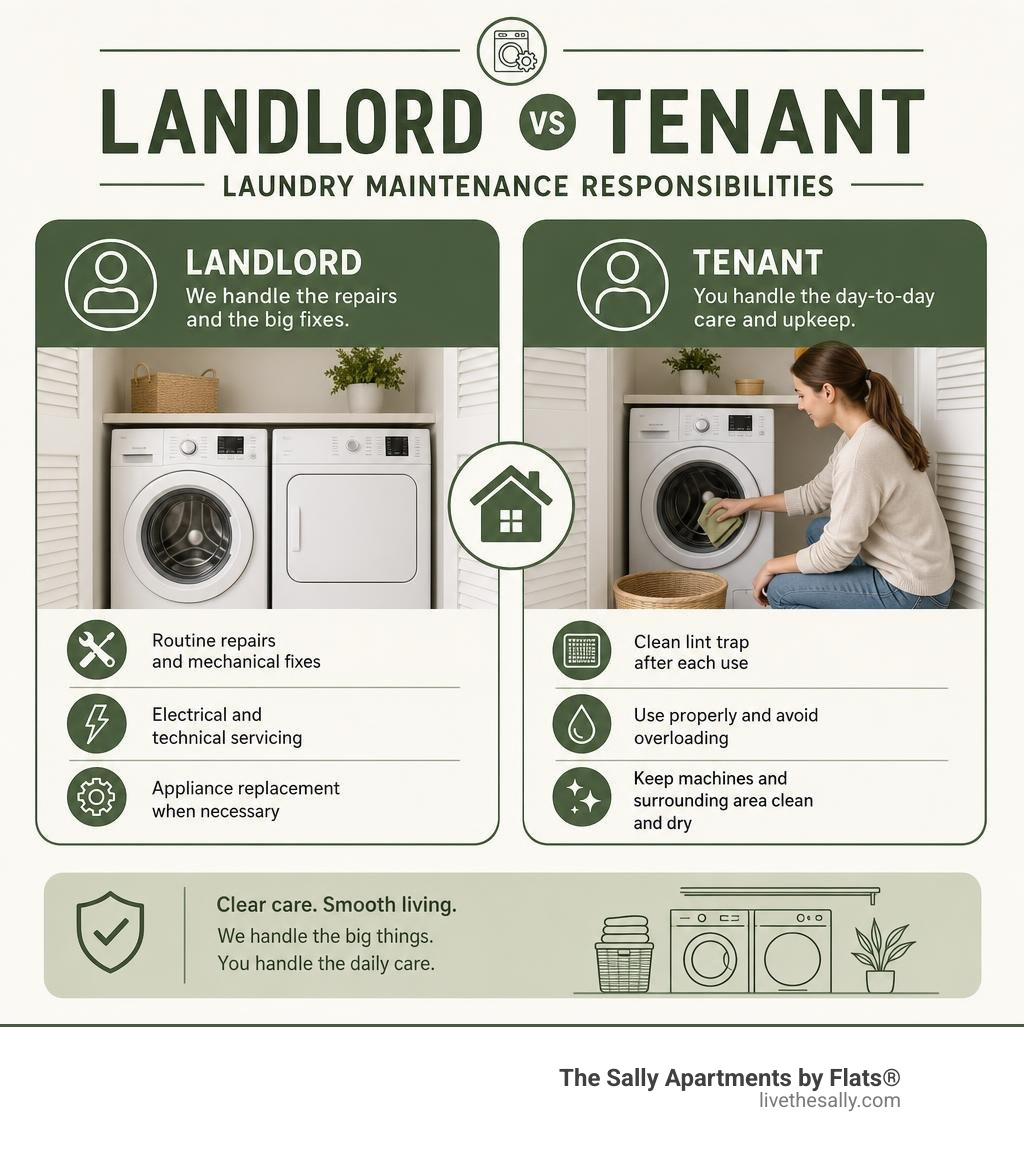
Managing Maintenance for In-Unit Laundry Apartments
In standard residential leasing agreements, the landlord or property management company owns the provided appliances and is responsible for routine repairs, electrical servicing, and mechanical fixes.
However, renters must perform standard day-to-day upkeep to prevent damage:
- Preventative Tenant Upkeep: Clear the dryer lint screen after every single load to ensure proper airflow and prevent overheating risks. Avoid overloading the washing machine drum, which can strain the motor belt and cause balance issues during high-speed spin cycles.
- Non-Emergency Requests: Property management companies generally classify broken washing machines or dryers as standard repair tickets rather than emergency service requests. While a leaking pipe or overflowing drum is an urgent matter requiring immediate shutoff, a machine that simply will not turn on may take a few business days to service.
- Plumbing and Leak Protocols: Locate the main water shutoff valves behind or near your washing machine when you move in. If you notice any water dripping from the supply hoses, notify maintenance immediately to prevent water damage to your flooring or neighboring units.
Frequently Asked Questions About Laundry Amenities
Is an apartment with in-unit washer and dryer worth the extra cost?
For most active renters, yes. The decision comes down to how much you value personal privacy, sanitary control, and saving time. If you do multiple loads of laundry per week, run activewear through frequent quick washes, or simply despise spending weekends waiting in public facilities, paying a moderate premium in monthly rent is usually a very worthwhile investment in your daily lifestyle.
How much do utilities increase with an in-unit washer and dryer?
Utility bill increases depend on appliance energy efficiency and your personal household washing habits. On average, running an in-unit washer and dryer twice a week adds between $100 and $200 per year to your electricity and water bills. For households doing daily laundry, utility increases can reach up to $700 per year. Selecting an apartment community equipped with ENERGY STAR rated appliances helps minimize these costs.
What are washer and dryer hookups, and how do they differ from included appliances?
Washer and dryer hookups mean the apartment unit contains the necessary plumbing connections (hot and cold water lines and drainage) alongside the required electrical outlet or gas connection, but no actual machines are installed. If an apartment listing specifies "hookups only," you will need to purchase, lease, or transport your own washer and dryer units into the property. When appliances are listed as "included," the landlord provides the physical machines ready for immediate use.
Conclusion

Finding modern in-unit laundry apartments requires knowing where to look, filtering listings accurately, timing your market search, and verifying appliance details before signing your lease. By taking these steps, you can eliminate common rental hassles like hauling laundry baskets across common facilities, hunting for quarters, or managing shared machine availability.
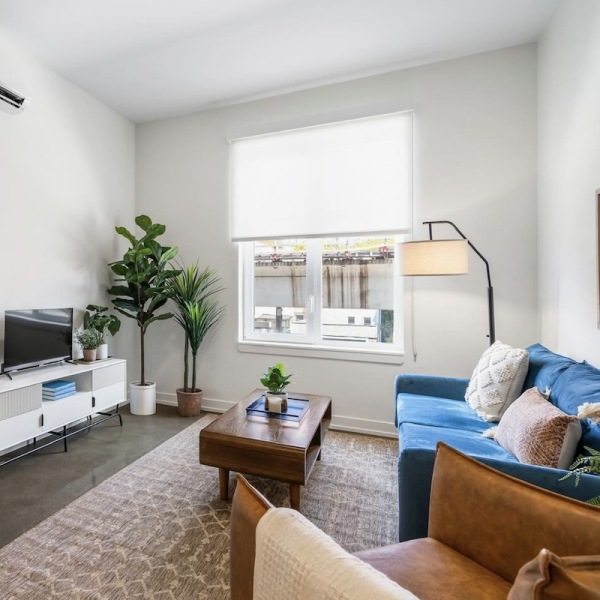
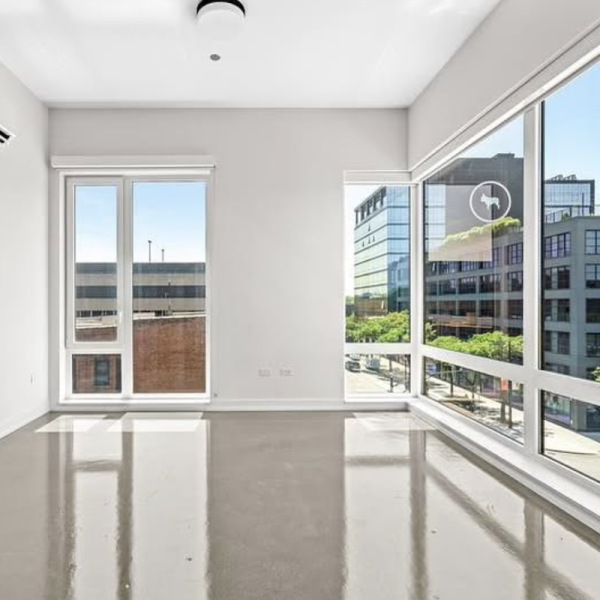
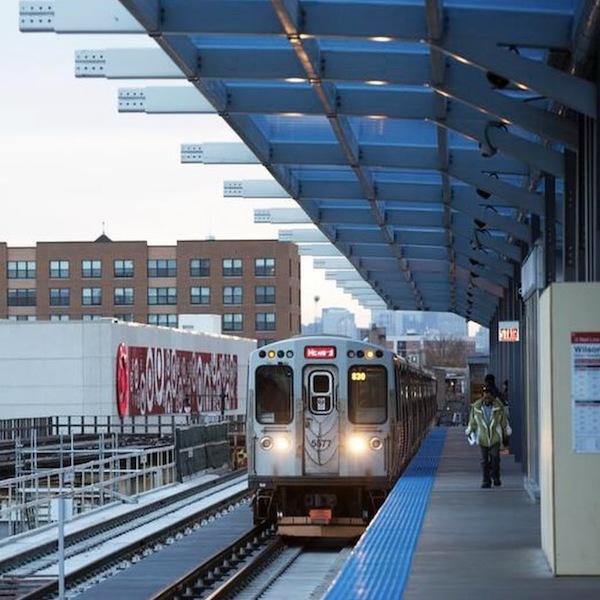
If you are looking for high-end urban living, explore options at The Sally Apartments by FLATS®. Located in Uptown Chicago, IL, our rental residences pair modern conveniences like private in-unit laundry with standout building features, including a stunning rooftop terrace, a dog run, and a dedicated pet spa designed to welcome up to two pets per residence.
Ready to make your next move effortless? Explore our available residences and complete your search using our comprehensive In-Unit Laundry Apartments Guide.