


Why Finding Pets Allowed Rent Is Harder Than It Should Be
Pets allowed rent is one of the most searched phrases by renters today — and for good reason. More than half of renters now have pets, but only about half of U.S. rentals allow them.
Here's a quick snapshot of what to expect when searching for pet-friendly housing:
- Availability: Roughly 55% of rental listings advertise as pet-friendly
- Pet limits: Most buildings cap at two pets per unit
- Breed restrictions: Common for certain dog breeds
- Service animals: Protected under federal law
- What helps: Vet records, vaccination proof, and a pet resume can all improve your chances
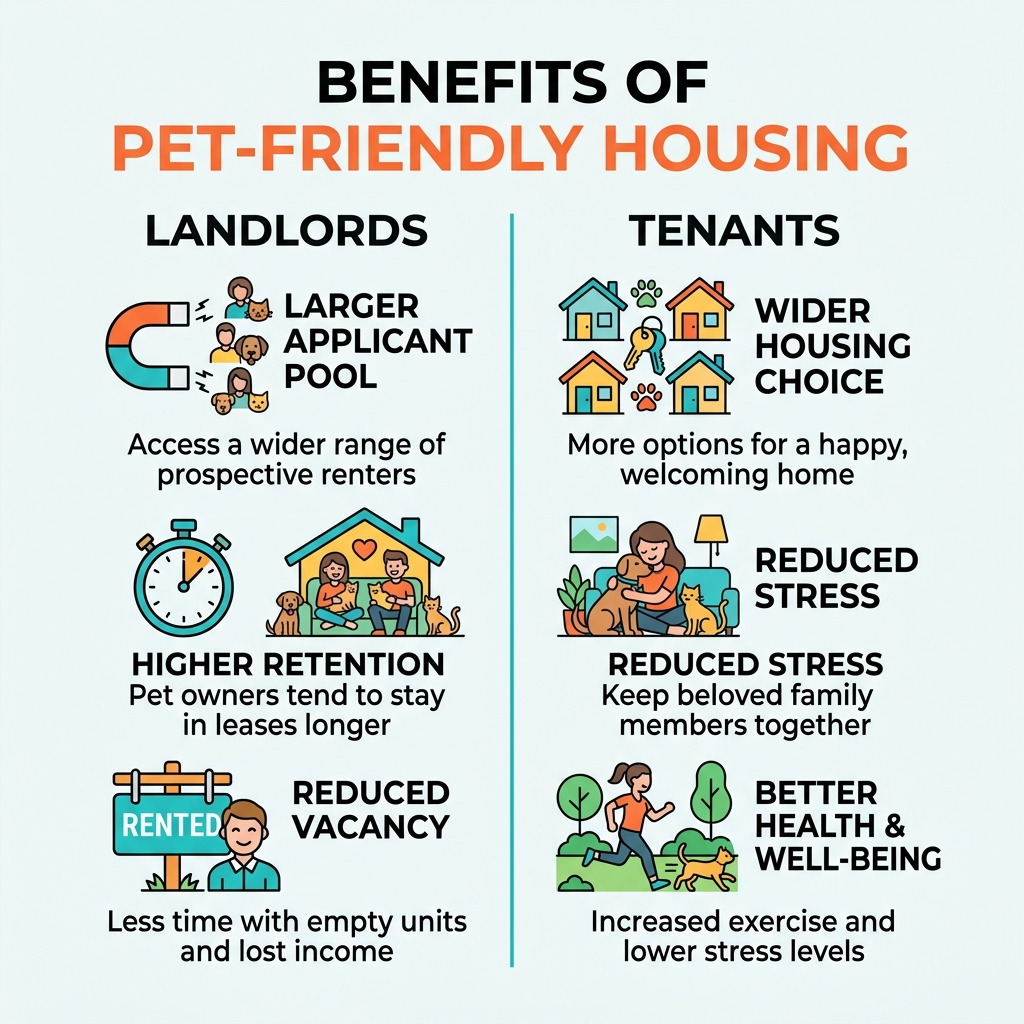
The good news? The market is shifting in pet owners' favor. Landlords are increasingly recognizing that renters with pets tend to stay longer and take better care of their homes. In fact, research shows that pet-friendly rentals see average lease lengths of 46 months — compared to just 18 months for rentals that don't allow pets.
But not all "pets allowed" apartments are created equal. There's a big difference between a building that reluctantly tolerates your dog and one that genuinely welcomes them — with amenities, community culture, and policies to match.
This guide walks you through everything you need to know to find a home that works for both you and your pet.
Understanding the Market for Pets Allowed Rent
When we look at the landscape of Chicago rentals, it is clear that the demand for pets allowed rent is higher than ever. For many of us, our dogs and cats aren't just animals; they are members of the family. Landlords are starting to see the logic behind this emotional connection, and the statistics are quite revealing.
By opening doors to four-legged residents, property owners effectively double their applicant pool. In a competitive market like Cook County, this is a massive advantage. Beyond just getting more applications, pet-friendly housing sees a reduction in vacancies compared to buildings with "no pets" policies.
Perhaps the most striking benefit for the community is tenant loyalty. On average, pet owners stay in their rentals for 46 months, while those in non-pet-friendly housing move after just 18 months. This stability creates a stronger sense of neighborhood and reduces the turnover that can plague large apartment buildings. Furthermore, landlords who allow pets often see higher engagement because the demand for these units is so naturally high.
If you are just starting your search in the Windy City, checking out a Pet-friendly apartments Chicago guide can help you narrow down which neighborhoods offer the best infrastructure for your furry friend.

Navigating Pet Policies and Common Restrictions
Finding a listing that mentions pets allowed rent is only the first step. Once you dig into the lease, you will likely find specific policies designed to keep the peace between pet owners and their neighbors.
Most modern apartment communities, including many in Chicago, implement a two-pet maximum. This helps keep living spaces comfortable for both residents and their animals. While some older buildings might have weight limits, many newer developments focus more on behavior, documentation, and community rules.
Pet screening has also become a standard part of the application process. This might involve an "interview" where the property manager meets your dog to assess their temperament, or the use of third-party services that review a pet's profile based on health records and behavioral history.
For a broader look at how these agreements should be structured, the Renting out your property: guidance for landlords and letting agents provides a solid framework for the expectations of both parties.
Common Breed Restrictions for Pets Allowed Rent
One of the most frustrating hurdles for dog owners is the "restricted breed" list. These restrictions are often based on property-specific policies or external requirements. Because policies vary from property to property, it is always worth confirming the current rules directly with the leasing team before applying.
Commonly restricted breeds include:
- Pit Bull Terriers and Staffordshire Terriers
- Rottweilers
- Doberman Pinschers
- Akita and Chow Chows
- German Shepherds
- Wolf Hybrids
Legal Rights for Renters
It is vital to understand the difference between a pet and an assistance animal. Under the Fair Housing Act (FHA) and the Americans with Disabilities Act (ADA), service animals and emotional support animals (ESAs) are not considered pets.
If you have a certified service animal or a documented emotional support animal:
- Restriction Exemptions: They are generally exempt from breed and weight restrictions.
- Documentation: You may be required to provide a letter from a healthcare professional confirming the need for the assistance animal, though landlords are limited in the types of questions they can ask.
For more detailed information on your rights, you can consult the HUD guidance on pets and assistance animals.
Proven Strategies for Pet Owners
To secure the best pets allowed rent options, we recommend treating your pet's "application" as seriously as your own. Landlords are often looking for reassurance that your pet is well-behaved and that you are a responsible owner.
Gathering the following documents into a "Pet Resume" can put you at the top of the pile:
- Vet References: A quick note from your vet confirming that your pet is healthy and up-to-date on shots.
- Vaccination Records: Proof of rabies and other essential vaccinations.
- Spay/Neuter Proof: Many buildings require this to prevent behavioral issues and "unplanned" additions to the tenant count.
- Renters Insurance: Ensure your policy includes coverage for your household. Most Chicago landlords require a standard liability policy.
Tips to Secure Your Dream Pets Allowed Rent
If you’ve found the perfect place but the landlord seems hesitant, try these "pro-tips" to swing the needle in your favor:
- Offer a Meet-and-Greet: If your dog is a "Good Boy" or "Good Girl" who knows their commands, invite the landlord to meet them. Seeing a calm, well-trained dog in person is much more convincing than a breed name on a piece of paper.
- Provide Training Certificates: If your dog has passed "CGC" (Canine Good Citizen) training or a basic obedience course, show the certificate! It proves you are an invested owner.
- Get Landlord Referrals: Ask your previous landlord to write a sentence or two specifically about your pet’s behavior. "Never heard a bark" or "Left the carpet spotless" goes a long way.
- Written Agreements: Always ensure the pet's name and breed are written directly into the lease addendum. Never rely on a verbal "it’s fine."
Essential Amenities for Modern Pet Living
Today’s luxury apartments in Chicago are moving beyond just "allowing" pets; they are designed to make life with them easier. When searching for pets allowed rent, look for these game-changing amenities:
- Dog Wash Stations: Forget trying to hoist a muddy Golden Retriever into your bathtub. Professional-grade pet spas with walk-in tubs and high-velocity dryers are a lifesaver.
- Indoor/Outdoor Dog Runs: Especially during Chicago winters, having an on-site relief area or a covered run means you don't have to trek six blocks in a blizzard for a quick bathroom break.
- Durable Flooring: Look for units with luxury vinyl plank (LVP) or treated concrete. These materials are much more resistant to scratches and "accidents" than traditional hardwood or carpet.
- Proximity to Parks: In Uptown, for instance, being near the lakefront or Montrose Dog Beach is a massive perk that adds hours of joy to your dog’s week.
Frequently Asked Questions about Pet-Friendly Rentals
How many pets are typically allowed in a rental?
In the Chicago and Cook County area, the standard limit is two pets per apartment. This is generally a community standard intended to manage noise levels and common area usage. While some private landlords might allow more, most professional management companies stick to the two-pet rule to ensure everyone has enough space.
Are service animals subject to breed restrictions?
No. Under federal law, service animals and emotional support animals are not pets; they are working animals or a part of a treatment plan. Therefore, they are not subject to breed or weight restrictions. However, the owner is still responsible for any actual damage the animal causes to the property.
Conclusion
Finding the right pets allowed rent doesn't have to be a stressful ordeal. By preparing a pet resume, understanding your legal rights, and targeting buildings that offer pet-centric amenities, you can find a home where your furry best friend is just as welcome as you are.
At The Teller House, we believe that a home isn't complete without your pets. Located in the heart of Uptown Chicago, our luxury apartments transform a historic bank building into a sophisticated living space that honors the neighborhood's cultural heritage. We offer a prime location near the city's best theatres and, most importantly, easy access to the lakefront parks your dog will love.
Ready to see how we’ve designed our spaces with you and your pet in mind? More info about amenities is just a click away. We can't wait to meet you and your four-legged roommates!