

Start Your Search for an Apartment With a Dog
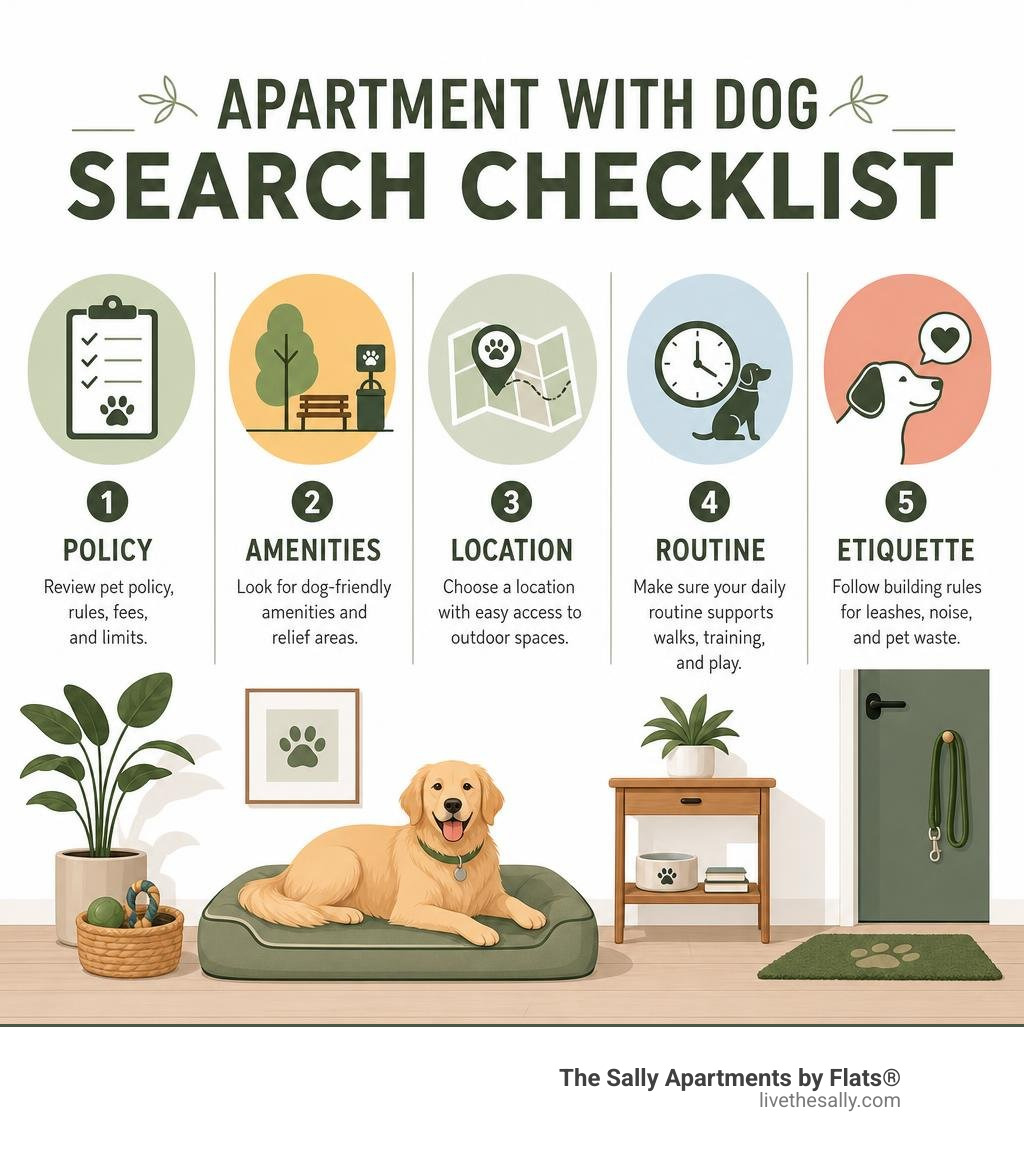
Finding an apartment with dog access starts with more than checking whether pets are allowed. The right home has a clear pet policy, practical places for walks and relief breaks, and rules that fit your dog's size, temperament, and daily needs.
For a quick shortlist, look for:
- A written pet policy that explains allowed pets, pet limits, weight rules, breed approval, and required fees.
- Dog-friendly features such as a relief area, waste stations, pet wash space, dog run, or nearby walking routes.
- A workable layout and location with room for a bed, crate, and enrichment toys, plus easy access to outdoor space.
- Clear building expectations for leashes, elevators, hallways, barking, and pet waste.
- A routine you can maintain for walks, training, play, and quiet time.
A small home does not automatically mean a poor fit for a dog. Energy level, noise habits, training, and consistent exercise often matter more than a dog's size. With the right match, apartment living can support intentional walks, daily enrichment, and better shared-space manners.
How to Find the Ideal Apartment with Dog Friendly Facilities
Searching for an apartment with dog accommodations requires looking closely at lease contracts, building rules, and physical property features. A property banner claiming to welcome pets can mean anything from simple permission to bring a small pet inside, to full-scale pet-focused facilities like indoor relief zones and dedicated grooming lounges. When evaluating potential residences in Chicago, taking time to examine the fine print prevents surprises down the road.
The leasing process begins with reviewing official lease agreements. Lease contracts define the legal obligations between you and management. Look specifically for clauses regarding pet policies, noise regulations, common area navigation, and liability requirements. Understanding these clauses early helps you assess whether a building truly fits your lifestyle and your pet's needs.
To help visualize the journey from initial search to move-in day, this step-by-step breakdown outlines the standard leasing timeline for pet parents:

Evaluating Pet Policies, Fees, and Restrictions
Every residential community manages pet ownership through distinct pet policies. Before submitting an application, request a copy of the pet addendum to review three critical factors: total pet allowances, recurring or upfront fees, and weight or breed criteria.
- Pet Limits: Most communities maintain a strict maximum limit of two pets per household. Verifying these allowances ensures full compliance with lease standards.
- Upfront Pet Deposits and Fees: Leasing offices often require an initial pet deposit or non-refundable pet fee upon signing. These funds cover baseline administrative administrative administration or deep-cleaning procedures after move-out.
- Monthly Pet Rent: In addition to standard monthly rent, ongoing pet rent is typically assessed per animal each month.
- Weight Limits and Breed Approval: Properties often implement mature weight limits or specific breed guidelines. If you are searching for options without strict breed bans, looking into no breed restrictions apartments provides options where dog temperament and responsible ownership take precedence over physical appearance.
Essential Dog Amenities and Common Facilities
On-site amenities elevate daily convenience for both you and your canine companion. Rather than walking several blocks in winter weather or inclement Chicago rain, dedicated on-site pet facilities make quick relief trips and daily care effortless.
Key building features to look for include:
- On-Site Dog Runs: Enclosed rooftop or ground-level dog runs give your dog a secure area to play off-lease, socialize, and stretch their legs without leaving the building perimeter.
- Pet Washing Stations & Spas: Modern high-rise communities increasingly offer specialized pet washing facilities. Choosing an apartment with pet spa access means you can clean muddy paws using elevated tubs, professional-grade shampoos, and high-velocity dryers right inside the building.
- Outdoor Turf & Relief Areas: Dedicated relief areas equipped with self-draining turf technology and automated washing systems ensure a clean, odor-free environment year-round.
- Pet Waste Stations: Conveniently located waste bag dispensers and disposal bins encourage property cleanliness and responsible resident habits.
| Feature Category | Standard Apartment Community | Specialized Dog-Friendly Community |
|---|---|---|
| Relief Zones | Nearby public sidewalks | On-site enclosed turf runs with automated cleaning |
| Grooming Options | In-unit bathtub or kitchen sink | On-site pet spa with elevated wash tubs & dryers |
| Social Spaces | Basic common hallways | Private pet lounge & community dog events |
| Waste Disposal | General exterior dumpsters | Dedicated waste stations with supply dispensers |
Selecting the Best Dog Breeds for Small Space Living
A common myth in urban housing is that small space living requires a tiny dog. In reality, physical size is rarely the primary factor in determining how well a dog adapts to an apartment environment. Energy levels, barking tendencies, noise sensitivities, and overall indoor behavior matter far more than weight or height.
When evaluating potential canine companions or preparing your current dog for an apartment transition, explore dedicated resources on finding apartments for pet owners to ensure your home environment aligns with your routine.
Choosing the Right Breed for an Apartment with Dog Restrictions
While temperament varies by individual dog, certain breed groups recognized by the American Kennel Club naturally adapt well to smaller floor plans and shared living spaces.
- Toy Breeds: Small companions such as the Cavalier King Charles Spaniel, Shih Tzu, and Bichon Frise offer moderate energy levels and compact sizes. Their modest space requirements make them comfortable in studio or one-bedroom layouts, provided their barking habits are managed with early training.
- Greyhounds: Despite their athletic racing heritage, adult greyhounds are renowned indoor "couch potatoes." They are quiet, docile, and naturally inclined to spend hours lounging on a dog bed after a brief daily sprint or structured walk.
- French Bulldogs and Pugs: These low-endurance, affectionate breeds require modest exercise routines and rarely bark without cause, making them ideal floor plan companions.
- Basset Hounds: Calm and easygoing, Basset Hounds enjoy relaxed indoor living, though their scent-driven instincts require firm leash handling on outdoor walks.
If you care for a larger dog breed, consulting our specialized apartments for large dogs guide offers practical strategies for navigating space layout, elevator etiquette, and daily exercise routines.
Matching Energy Level Over Dog Size
A high-energy small terrier may demand significantly more stimulation and vocal outlet than a calm, giant breed like a Great Dane. Matching your lifestyle to a dog's natural energy profile prevents behavioral issues stemming from boredom or pent-up physical drive.
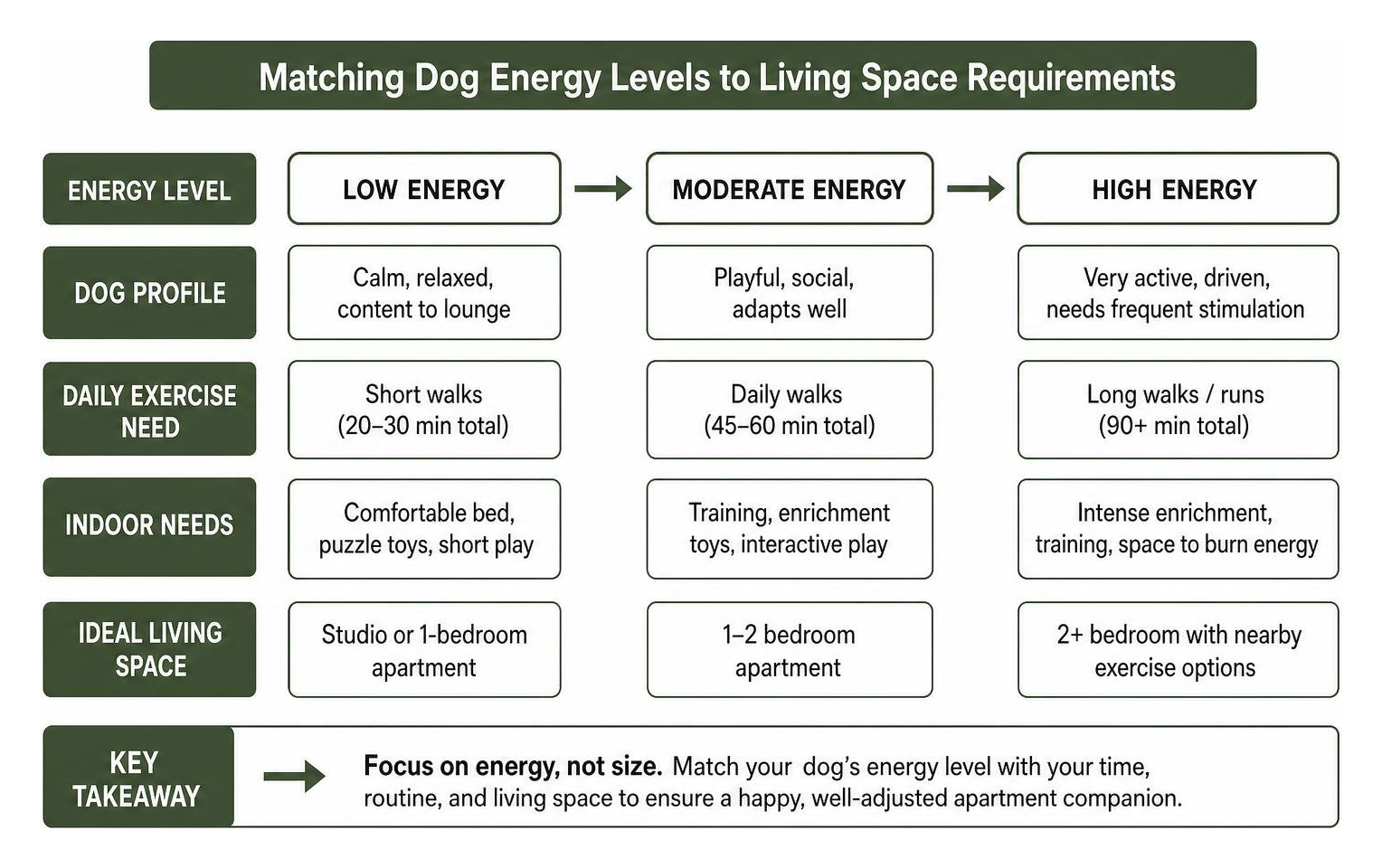
A low-energy dog thrives when provided with comfortable bedding, short daily walks, and interactive puzzle toys. Conversely, a high-energy dog in an apartment requires structured daily exercise, outdoor running routines, and active mental enrichment to maintain quiet indoor composure.
Managing Behavior and Daily Training in an Apartment
Living in close proximity to neighbors requires proactive behavioral management. Hallway footsteps, elevator dings, door closures, and ambient city soundscapes can trigger alert barking or anxiety if your dog is unprepared.

Managing your dog's noise level preserves strong neighbor relations and ensures lease compliance. Helpful noise masking and desensitization techniques include:
- White Noise Machines: Placing a sound machine or running a fan near the main entry door masks corridor footsteps and elevator activity, preventing alert reactions.
- Background Audio: Leaving a television, radio, or soft classical music playing while away creates an ambient sound blanket that reduces startle responses.
- Counter-Conditioning: When your dog hears a hallway sound, immediately offer a high-value treat before they react. Over time, your pet learns to associate corridor sounds with positive rewards rather than potential threats.
- Bed Placement: Position your dog's resting area away from entry doors and shared partition walls to minimize proximity to hallway movement.
Daily Routine and Potty Training in an Apartment with Dog Amenities
Establishing a predictable daily schedule is essential for house training in multi-story residential buildings. High-rise living presents unique logistical considerations for potty breaks compared to homes with immediate backyards. For more structured guidance, review our comprehensive apartment pet friendly guide 2026 to streamline your transition.
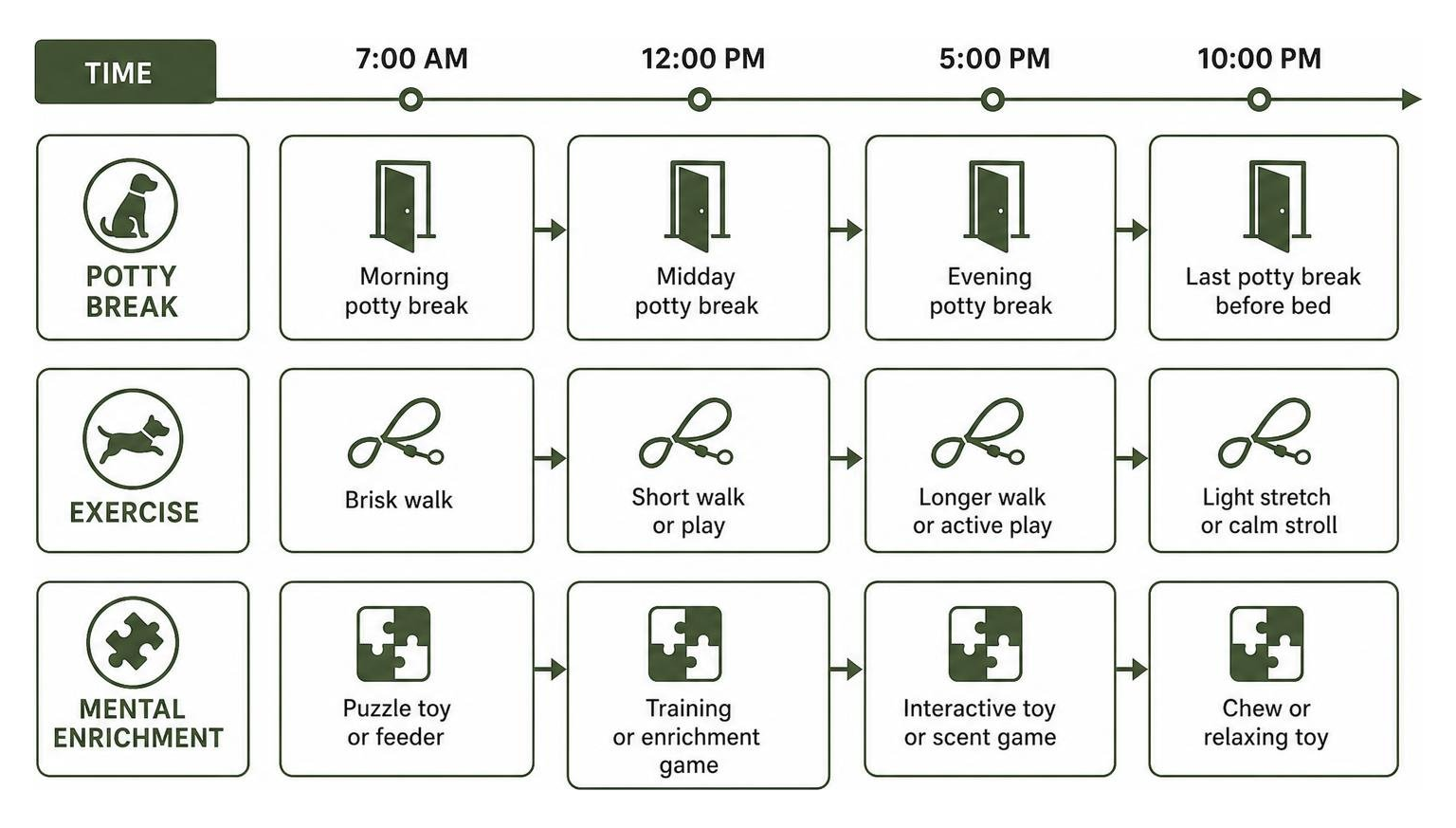
Effective house training strategies include:
- Consistent Walk Times: Establish fixed morning, afternoon, and evening outdoor trips so your dog learns when to expect relief opportunities.
- Balcony Relief Pads: If your apartment floor plan features a private balcony, setting up a temporary synthetic turf pad provides a convenient relief solution during late-night hours or severe winter weather.
- Positive Reinforcement: Reward your dog with praise and immediate treats the moment they eliminate in designated outdoor zones or on relief turf.
Common Area and Elevator Etiquette
Courteous navigation of shared residential spaces builds goodwill among neighbors and protects pet access for the entire community. Lobbies, elevators, corridors, and stairwells require polite manners and total owner control.
- Short Leashes: Keep your dog on a non-retractable, short leash (six feet or less) whenever moving through common corridors or entryways.
- Hallway Reactivity: Step into alcoves or cross to wider corridor spaces if your dog reacts to oncoming people or other pets.
- Elevator Comfort: Before entering an elevator, ask your dog to sit quietly beside you. If an elevator is already crowded or contains another pet, politely wait for the next car to maintain adequate personal space.
- Lobby Manners: Discourage your dog from jumping on building staff or neighbors. Reward calm, seated behavior while waiting near front desks or mailrooms.
Mental Enrichment and Indoor Physical Exercise
Physical exertion is only one part of keeping an apartment dog calm and satisfied. Mental stimulation consumes significant energy, reducing stress, destructive chewing, and unwanted vocal behavior.
Incorporate these mental enrichment ideas into your daily routine:
- Sniff Walks: Allow your dog to explore scent trails during outdoor walks. A 20-minute slow "sniff walk" offers as much mental exertion as a brisk 40-minute physical walk.
- Puzzle Toys and Feeder Toys: Ditch traditional food bowls and serve meals inside interactive puzzle toys or wobble feeders to encourage active problem-solving.
- Snuffle Mats: Hide dry kibble or small treats inside fabric snuffle mats, turning mealtime into an engaging indoor foraging game.
- Indoor Games: Practice gentle indoor fetch using soft toys along carpeted hallways, or hide treats around your living area for a fun game of nose work.
Frequently Asked Questions About Living in an Apartment with a Dog
How much exercise does an apartment dog need daily?
Most healthy adult dogs require between 60 and 90 minutes of total physical exercise and mental engagement each day. This time is ideally divided across two or three intentional outings, including at least one extended walk lasting 30 to 45 minutes. Combining physical walking with sniffing opportunities and indoor puzzle toys ensures your pet stays balanced, healthy, and quiet inside your home.
How do I house train a dog in a high-rise apartment?
House training in a high-rise apartment relies on strict timing, positive reinforcement, and clear relief routines. Take your dog out immediately after waking, eating, or playing. Use a short leash to guide them through corridors and elevators directly to designated outdoor relief areas or an on-site dog run. For late-night relief or extreme weather, a balcony grass pad serves as an effective intermediate solution. Always reward successful outdoor elimination immediately with high-value treats and praise.
What should I look for in pet-friendly apartment amenities?
When searching for a pet-focused apartment community, prioritize amenities that streamline daily care and hygiene. Look for on-site enclosed dog runs with synthetic turf, pet washing stations or full pet spas, integrated pet relief zones, and dedicated waste stations stocked with bags and disposal units. These features save time, keep your living space clean, and provide safe indoor or outdoor play environments year-round.
Conclusion
Living in an apartment with dog companions provides a rewarding lifestyle centered on intentional exercise, shared routines, and daily companionship. When you choose a residence designed around pet ownership, managing daily walks, grooming, and play becomes effortless.
At The Sally Apartments by FLATS, we offer boutique luxury rentals in the heart of Uptown Chicago designed specifically for you and your two-legged and four-legged family members. Featuring private on-site pet amenities—including a dedicated dog run and a full-service pet spa—alongside modern residential comforts like in-unit laundry and a sunlit rooftop terrace, our community provides the ultimate urban environment for pet lovers.
Explore our comprehensive pet-friendly apartments guide or contact our leasing team today to schedule your private tour of our dog-friendly homes.