


What You Need to Know Before Searching for Apartments That Allow Dogs
Finding apartments that allow dogs is more possible than ever — but the process has real hurdles. Here's a quick snapshot of what to expect:
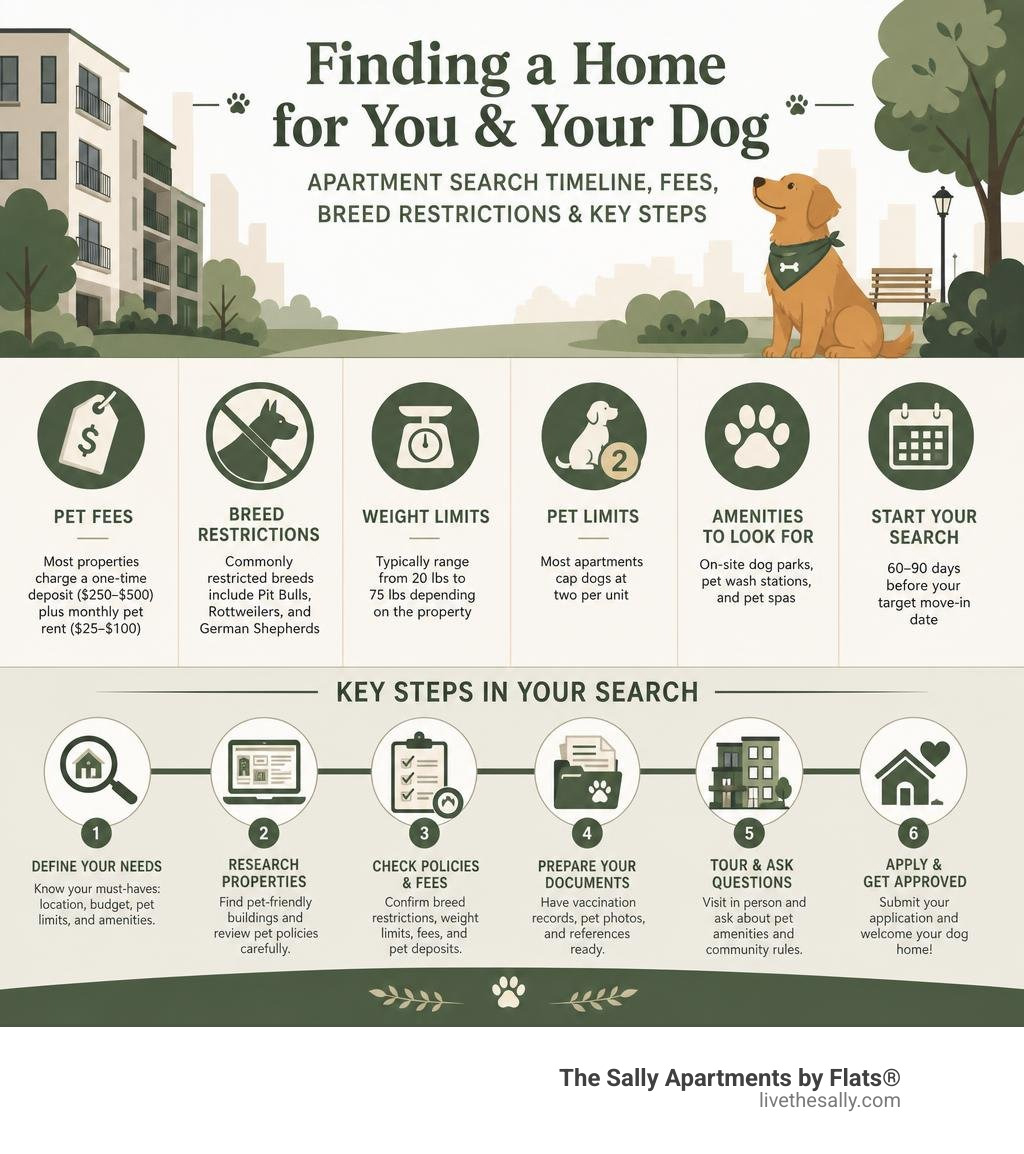
Quick answers for dog-friendly apartment hunters:
- Pet fees: Most properties charge a one-time deposit ($250–$500) plus monthly pet rent ($25–$100)
- Breed restrictions: Commonly restricted breeds include Pit Bulls, Rottweilers, and German Shepherds
- Weight limits: Typically range from 20 lbs to 75 lbs depending on the property
- Pet limits: Most apartments cap dogs at two per unit
- Amenities to look for: On-site dog parks, pet wash stations, and pet spas
- Start your search: 60–90 days before your target move-in date
The demand for dog-friendly rentals is real. There are over 11,040 pet-friendly listings in NYC alone, nearly 14,494 across Minnesota, and thousands more in cities like Chicago. But "pets allowed" doesn't always mean your dog is welcome — policies vary wildly between buildings, and missing a key detail before signing can lead to unexpected issues.
This guide cuts through the noise with 10 practical tips to help you find the right home for you and your dog.
Tip 1 to 5: Navigating Policies and Costs for Apartments That Allow Dogs

Securing a rental when you have a four-legged family member requires a strategic approach. It is not just about finding a building with a "pets welcome" sign on the front door; it is about understanding the fine print of the rental agreement. Many housing providers establish specific rules to ensure community harmony, safety, and property preservation.
When searching for apartments that allow dogs, the first five tips focus on the legalities, restrictions, and financial commitments required of pet owners. By mastering these details upfront, you can avoid lease violations and find a stress-free environment where you and your dog can thrive.
Breed Restrictions in Apartments That Allow Dogs
One of the most common obstacles dog owners face is the breed restriction list. Even if a building advertises itself as pet-friendly, property managers often maintain a list of restricted breeds. These restrictions are frequently dictated by commercial insurance policies rather than the property managers themselves.
Commonly restricted breeds often include:
- Pit Bull Terriers
- Rottweilers
- German Shepherds
- Doberman Pinschers
- Chow Chows
- Siberian Huskies
- Wolf Hybrids
In addition to breed limitations, some communities impose strict weight limits, often capping dogs at 25, 35, or 50 pounds. If you share your life with a larger companion, you will need to target your search specifically toward communities with more inclusive policies. To understand how to navigate these rules, explore our comprehensive No Breed Restrictions Apartments guide, or read through our Apartments for Large Dogs Guide to find properties that welcome larger canine companions.
Tip 2: Prepare for Pet Fees, Deposits, and Pet Rent
Renting with a dog comes with additional financial responsibilities. Landlords charge these fees to cover the wear and tear that animals can cause to carpets, hardwood floors, and common areas. When signing a lease, you should expect to encounter three distinct types of charges:
- One-Time Pet Fee: This is a non-refundable upfront charge paid when you move in. In Chicago, this fee typically ranges from $250 to $350 per pet.
- Refundable Pet Deposit: Unlike a fee, a deposit is held by the landlord and returned to you at the end of your tenancy, provided your dog has not caused damage to the unit.
- Monthly Pet Rent: This is an ongoing monthly charge added to your base rent. In major metropolitan areas, pet rent typically ranges from $25 to $50 per pet per month.
These costs are standard during your first year in a new home. Knowing what to expect allows you to prepare for these requirements ahead of time. For a complete breakdown of what to expect in the current rental market, consult our Dog Friendly Apartments Guide 2026.
Tip 3: Limit Your Household to Two Pets
If you have a larger animal family, you may find your options limited. The overwhelming majority of dog-friendly apartment buildings enforce a strict limit of two pets per unit. This rule is put in place to prevent overcrowding, minimize noise, and ensure that apartments remain manageable and clean.
Attempting to bypass this rule by failing to declare a third pet is a serious lease violation that can lead to eviction. If you are looking for a home that accommodates multiple animals, always confirm the limit during your initial inquiry. Learn more about how to find communities that accommodate your household size by reading our guide on Apartments for Rent Dog Friendly.
Tip 4: Create a Comprehensive Pet Resume
To stand out in a competitive rental market, you should treat your dog's application with the same level of professionalism as your own. Creating a "pet resume" is an excellent way to reassure skeptical property managers that you are a responsible owner with a well-behaved companion.
A strong pet resume should include:
- A high-quality photo: Humanize your pet with a friendly, clear picture.
- Vital statistics: List your dog's breed, age, weight, and spay/neuter status.
- Vaccination records: Provide up-to-date documentation from your veterinarian.
- Training certificates: Include proof of obedience training or certifications like the AKC Canine Good Citizen award.
- Landlord references: Ask your previous housing providers to write a short note confirming that your dog did not cause damage or disturb neighbors.
Presenting this packet during your application shows that you take your responsibilities seriously, which can sometimes encourage property managers to make exceptions for minor policy guidelines.
Tip 5: Verify Policies Directly with Property Management
Never rely on a verbal promise or an outdated online listing when it comes to pet policies. Real estate markets move quickly, and building rules can change from year to year. Before you submit an application fee or sign a lease, contact the leasing office directly to verify their current pet guidelines.
Ask specific questions:
- Are there any weight limits on upper floors?
- Do you require a "pet interview" before approval?
- Are the pet fees charged per pet, or are they a flat rate for the household?
Once you receive confirmation, ensure that all pet-related terms, fees, and exceptions are explicitly written into your lease agreement before you sign. To begin researching active listings with pet-friendly parameters in the Chicago area, you can browse the Zillow Chicago Pet Friendly Listings.
Tip 6 to 10: Evaluating Amenities and Neighborhood Infrastructure

Finding a building that merely tolerates your dog is not the same as finding a home where your pet can thrive. True pet-friendly living combines smart in-building design with a neighborhood that supports an active outdoor lifestyle. The second half of our tips focuses on evaluating the physical amenities and local infrastructure that make daily life with a dog convenient and enjoyable.
Luxury Amenities in Apartments That Allow Dogs
Modern residential developments have evolved far beyond basic pet acceptance. Today, premium properties feature dedicated, climate-controlled spaces designed specifically for canine wellness. When touring prospective buildings, look for on-site features that simplify your daily routine, especially during cold winter months.
Key luxury amenities include:
- On-Site Dog Runs: Fenced, secure areas within the building footprint where your dog can stretch its legs and socialize without requiring a long walk to a public park.
- Pet Spas and Wash Stations: Dedicated grooming rooms equipped with raised tubs, professional-grade sprayers, and blow dryers. These stations allow you to wash muddy paws before entering your apartment, keeping your living space clean.
At The Sally Apartments, we understand how important these conveniences are. That is why our luxury community in Uptown Chicago features a fully equipped dog run and a modern pet spa. To explore the benefits of these high-end features, read our articles on Apartments with Pet Spa and Apartments with Dog Runs Chicago.
Tip 7: Assess Neighborhood Walkability and Green Spaces
An apartment's interior is only half of the equation; the surrounding neighborhood plays an equally vital role in your dog's well-being. Before committing to a lease, take a walk around the block to evaluate the local pet infrastructure.
Look for:
- High Walk Scores: Sidewalks should be wide, well-maintained, and safe for pedestrian traffic.
- Proximity to Public Parks: Access to green spaces and designated dog-friendly park areas is crucial for daily exercise.
- Local Pet Businesses: Having veterinarians, pet supply stores, and professional dog walkers nearby adds immense convenience to your life.
Chicago neighborhoods like Uptown offer an exceptional balance of urban convenience and natural beauty, providing immediate access to lakefront paths and parks. To discover the most welcoming neighborhoods in the city, check out our guide on Chicago Dog Friendly Apartments or read the Green Paws Chicago Neighborhood Guide for local insights.
Tip 8: Prepare for the Move and Local Regulations
Moving is a major life transition that can be stressful for animals. To make the move as smooth as possible, plan your logistics with your dog's comfort in mind. Keep their routine consistent, pack an easily accessible "first-night" bag with their favorite toys, food, and bowls, and consider using calming pheromone sprays during transition days.
Additionally, make sure you comply with local pet regulations once you arrive in your new neighborhood:
- City Registration: Most municipalities, including Chicago, require pet owners to register their dogs and obtain a city dog license.
- Vaccination Compliance: Ensure your dog's rabies vaccinations are up-to-date according to local laws.
- Leash Laws: Familiarize yourself with local ordinances regarding leash lengths and designated off-leash areas to avoid potential fines.
Tip 9: Understand Your Rights Regarding Service Animals
If you rely on a service animal or an emotional support animal (ESA), it is essential to understand your legal protections under federal law. The Fair Housing Act (FHA) protects individuals with disabilities by ensuring they have equal access to housing.
Under the FHA:
- Not Considered Pets: Service dogs and ESAs are categorized as assistance animals, not pets.
- Exempt from Fees: Landlords are legally prohibited from charging pet deposits, one-time pet fees, or monthly pet rent for assistance animals.
- No Breed or Weight Restrictions: Assistance animals are exempt from standard building breed and weight limits.
- Reasonable Accommodations: Housing providers must make reasonable accommodations to allow these animals in the building, provided you can supply appropriate documentation from a licensed healthcare professional.
Understanding these rights ensures you are treated fairly throughout the application process.
Tip 10: Start Your Search Early and Use Specialized Filters
Because pet-friendly units are in high demand, starting your search early is key. We recommend beginning your hunt at least 60 to 90 days before your current lease expires. This extended timeline gives you plenty of room to tour properties, verify policies, and submit your documentation without feeling rushed.
When searching online, make full use of advanced search filters. Platforms allow you to filter listings specifically by "Dogs Allowed" or "Cat Friendly," saving you from wasting time on properties that do not accommodate your household. To explore active listings with these parameters, you can check the Apartments.com Chicago Pet Friendly Listings.
Frequently Asked Questions about Renting with Dogs
What is the difference between a pet fee and pet rent?
A pet fee is a one-time, non-refundable payment made at the start of your lease to cover the general risk of having an animal in the unit. Pet rent is an ongoing monthly charge added to your rent bill, designed to offset the daily wear and tear on the building's shared spaces and landscaping.
Can landlords change their pet policies after I sign a lease?
No, landlords cannot alter the terms of your active, signed lease agreement. If you have written permission to keep your dog in the unit, that permission remains valid until your lease term expires. However, when your lease comes up for renewal, the landlord has the right to update their policies, introduce new fees, or change pet restrictions. If this happens, existing pets are often "grandfathered" in, but you should always secure this agreement in writing.
Are service animals subject to breed restrictions or pet fees?
No. Under the Fair Housing Act, service animals and emotional support animals are classified as assistance animals rather than pets. Consequently, they are exempt from all pet-related charges, including upfront fees, monthly pet rent, and security deposits. They are also exempt from standard building breed and weight limits.
Conclusion
Finding the right apartment for you and your dog does not have to be an overwhelming process. By understanding pet policies, planning for associated fees, and focusing on neighborhoods with strong pet infrastructure, you can secure a home where your entire household can thrive.
If you are planning a move to Uptown Chicago, we invite you to discover The Sally Apartments by FLATS®. Our luxury rental community is designed with pets in mind, featuring premium in-unit amenities like laundry, a beautiful rooftop terrace, and dedicated on-site facilities including a dog run and a professional pet spa.
Ready to find a place where you and your dog can both feel at home? Find Pet-Friendly Apartments in Chicago and schedule a tour with us today!