

What You Need to Know About Living in Apartments with Dogs
Apartments with dogs are more available than ever — but finding the right fit takes more than spotting a "pets allowed" sign.
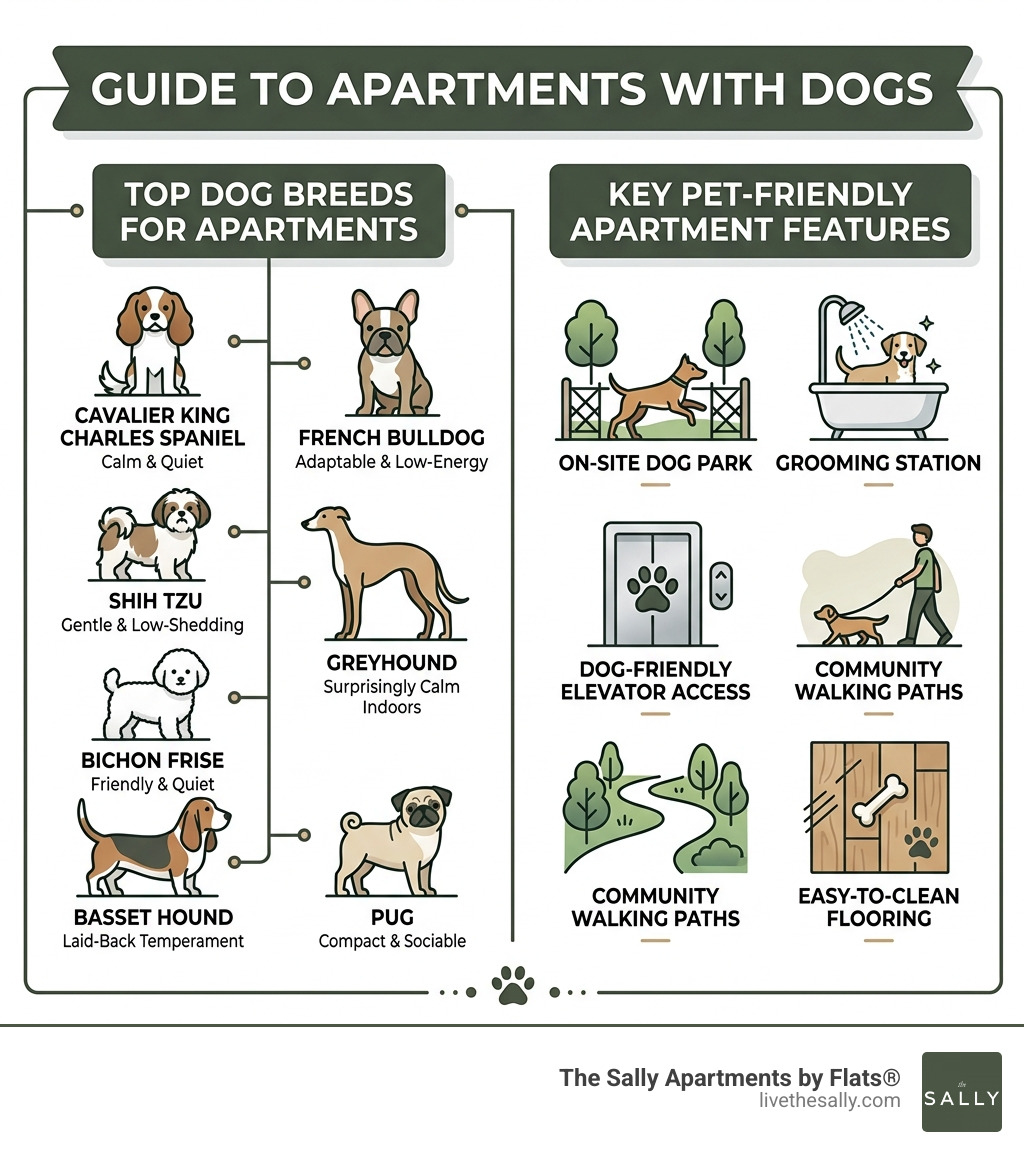
Here are the best apartment dog breeds for smaller spaces:
- Cavalier King Charles Spaniel - calm, quiet, low-energy indoors
- French Bulldog - compact, adaptable, minimal exercise needs
- Shih Tzu - gentle, happy in small spaces, low-shedding
- Greyhound - surprisingly low-energy indoors despite their size
- Bichon Frise - friendly, quiet, well-suited to apartment life
- Basset Hound - laid-back temperament, low activity indoors
- Pug - compact, sociable, thrives in urban environments
These breeds tend to adapt well to apartment living because of their calm temperaments, lower exercise demands, and quieter natures — all key factors for shared buildings.
Most apartments allow up to two pets per unit. Many have weight limits (commonly 40–75 lbs) and restrict certain breeds. Monthly pet rent and one-time fees are standard. The good news: the right dog and the right building can be a perfect match.
Whether you're a young professional eyeing a modern high-rise or a renter navigating a crowded market, knowing what to look for in a pet-friendly unit — and which breeds thrive indoors — makes the whole process smoother.
This guide covers everything: policies, breed choices, amenities, and how to put together a strong application.
Essential Policies for Apartments with Dogs

When we start the hunt for the perfect home, the first thing we have to navigate is the fine print. Every building has a different philosophy when it comes to four-legged residents. In our experience, understanding the Pet Friendly Apartments Guide is the best way to avoid heartbreak later.
Most leases in Chicago will limit residents to two pets per household. This is a standard industry practice designed to manage noise and wear and tear on the units. Additionally, many buildings implement weight restrictions. While some luxury developments are becoming more flexible, a common cap is around 50 to 75 pounds. If you have a larger companion, it is vital to check if the weight limit applies to each individual pet or if it is a combined weight for both.
| Fee Type | Typical Range | Refundable? |
|---|---|---|
| One-time Pet Fee | $300 - $500 | No |
| Pet Deposit | $200 - $400 | Often Yes |
| Monthly Pet Rent | $20 - $60 | No |
Navigating Breed Restrictions in Apartments with Dogs
One of the more complex hurdles in finding apartments with dogs is the restricted breed list. These lists are often driven by insurance liability rather than the actual temperament of the individual dog. Common breeds that face restrictions include Pit Bull Terriers, Rottweilers, Doberman Pinschers, Akita, and Wolf-hybrids.
However, we are seeing a shift in how modern buildings approach this. Some communities are moving toward No Breed Restrictions Apartments, choosing instead to focus on temperament assessments or "pet resumes." If your dog is a restricted breed but has a stellar behavioral history, some landlords may make exceptions if you can provide professional training certificates or references from previous landlords.
Understanding Pet Fees and Deposits
Budgeting for a pet involves more than just food and vet visits; it includes the "pet real estate tax." Most Pet Friendly Apts charge a combination of upfront and ongoing fees.
For instance, you might encounter a non-refundable pet fee, which covers the administrative costs and the deep cleaning required after you move out. This is different from a pet deposit, which may be refundable if your dog doesn't leave any "surprises" on the hardwood. Then there is pet rent—a monthly fee that treats your dog as an additional occupant. These fees help maintain high-end pet-friendly amenities like on-site dog runs and washing stations.
Choosing the Best Breeds for Apartment Living

While any dog can technically live in an apartment if their exercise needs are met, certain breeds make for better neighbors. When we look for Apartments for Pet Owners, we have to consider the "politeness" of the breed. A dog that barks at every footstep in the hallway or requires a backyard to run in might struggle in a high-rise.
Size isn't the only factor. Surprisingly, some large dogs are actually "couch potatoes" that thrive in smaller footprints, while some small terriers have high energy levels that require constant stimulation.
Low-Energy Breeds for Smaller Spaces
If you prefer a quieter lifestyle, choosing a low-energy breed is a smart move. According to our Pet Friendly Rental Units Guide, breeds like the Basset Hound or the French Bulldog are excellent choices because they are perfectly happy spending the afternoon napping while you work from home.
Indoor activity is key. A breed with a calm temperament will generally be more relaxed when left alone, reducing the risk of separation anxiety-related destruction. Even larger breeds like Greyhounds are famous for being "45-mph couch potatoes"—they need a good sprint at a local park, but once they are inside, they are incredibly mellow.
Managing Barking and Noise in Shared Buildings
Living in a shared building means being mindful of the soundscape. A vocal dog can lead to tension with neighbors. To help your pup settle in, we recommend following the Chicago Pet Friendly Ultimate Guide for training.
Training tips for noise management:
- Desensitization: Gradually expose your dog to common hallway sounds like elevators or neighbors talking.
- White Noise: Using a fan or a white noise machine near the door can drown out triggering sounds.
- Puzzles: Keep your dog occupied with lick mats or frozen treats to prevent boredom-induced barking.
Top Amenities to Look for in Pet-Friendly Rentals
The difference between a building that simply "allows" dogs and one that "welcomes" them lies in the amenities. In Uptown Chicago, we have seen a massive rise in luxury features designed specifically for pets.
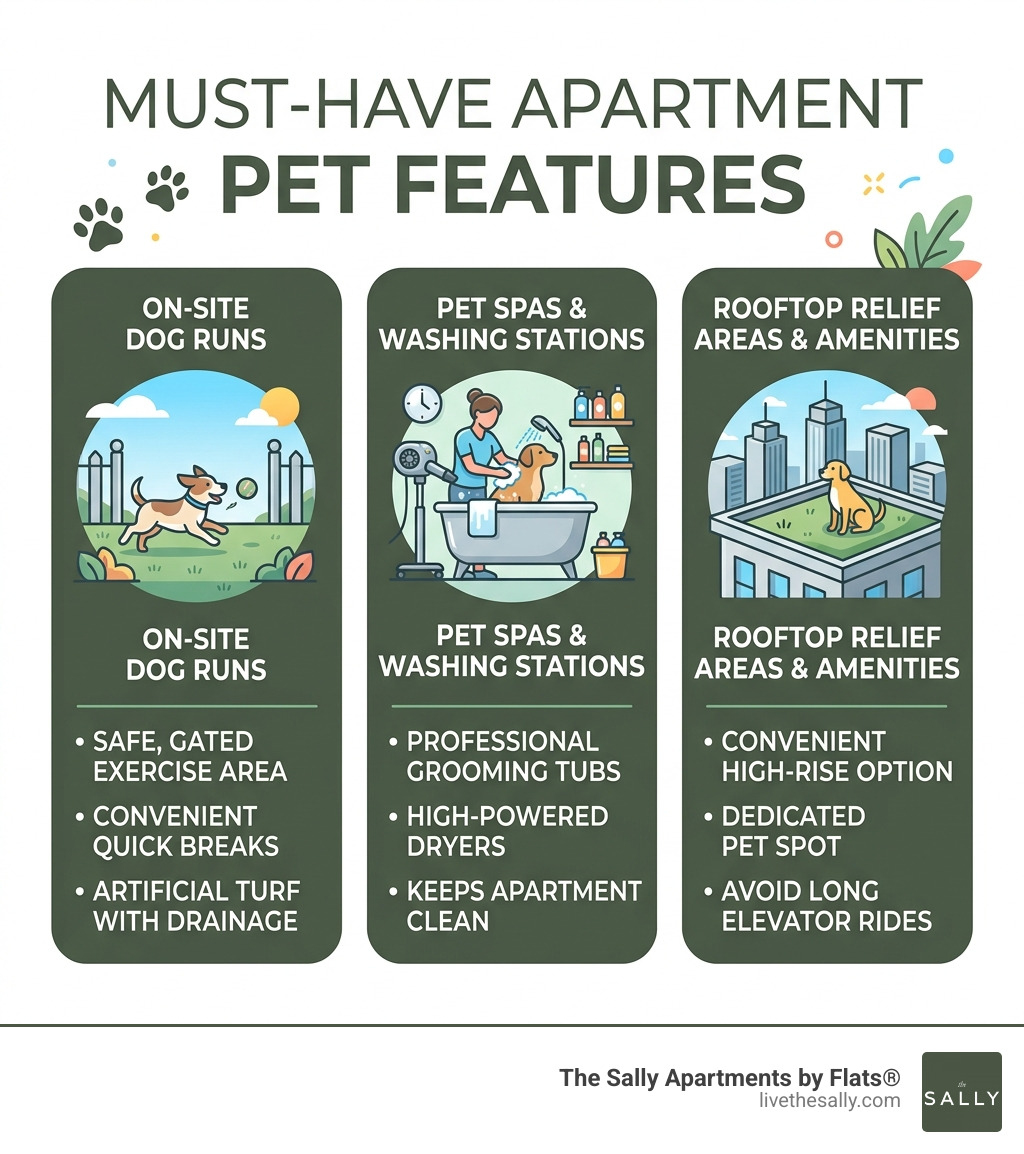
A true Apartment with Pet Spa is a game-changer, especially during Chicago winters. Instead of dragging a muddy dog through your living room and into your bathtub, you can use a professional-grade washing station in the building's common area. Many luxury properties now include these as standard features.
Evaluating Amenities in Apartments with Dogs
When touring potential apartments with dogs, look for these specific features:
- On-site Dog Runs: Essential for late-night bathroom breaks or quick exercise sessions. Many Apartments with Dog Runs Chicago feature weather-protected areas or artificial turf with drainage systems.
- Pet Spas: Grooming stations with professional tubs and dryers.
- Rooftop Relief Areas: High-rise buildings often provide a dedicated spot on the roof terrace for pets, saving you a long elevator ride to the ground floor.
- Pet Concierge: Some buildings offer dog walking or grooming referrals through their front desk.
Proximity to Parks and Outdoor Spaces
Building amenities are great, but the surrounding neighborhood is just as important. We always suggest checking the Chicago Dog Park map to see what is within walking distance. In Uptown, proximity to the Lakefront Trail and Montrose Dog Beach provides miles of green space for your dog to explore. A neighborhood with wide sidewalks and plenty of pet-friendly businesses makes the urban dog-owning experience much more enjoyable.
How to Prepare Your Application for a Dog-Friendly Unit
In a competitive market like Chicago, having your paperwork ready can be the difference between getting the keys or losing out. Landlords want to see that you are a responsible owner. We recommend gathering all your Dog Friendly Apartment Chicago Tips into one organized folder.
Most modern complexes will require:
- Up-to-date vaccination records (especially Rabies).
- A clear photo of your pet for identification.
- Proof of renter’s insurance that covers pet liability.
Creating a Professional Pet Resume
A pet resume might sound a little "extra," but it is a highly effective tool. According to the Best Dog Friendly Apartments Ultimate Guide, a resume helps humanize your pet and proves their "good citizen" status.
Your pet resume should include:
- Basic Info: Name, breed, age, and weight.
- Health Status: Confirmation of spay/neuter and current vaccinations.
- Training: Mention any obedience classes or "Canine Good Citizen" certifications.
- References: A short note from a previous landlord or a neighbor confirming your dog is quiet and well-behaved.
Navigating the Pet Screening Process
Many buildings now use third-party digital platforms to screen pets. This ensures that all residents follow the same Pet Friendly Apartment Chicago Guide rules. These profiles often require an annual renewal and a small fee.
If you have a service animal or an emotional support animal, the process is slightly different. Under the Fair Housing Act, these animals are not considered "pets" and are generally exempt from breed restrictions and pet rent. However, you will still need to provide the appropriate documentation through the screening portal to ensure everything is handled correctly.
Frequently Asked Questions about Apartments with Dogs
What are the most common breed restrictions?
Most buildings restrict breeds that are traditionally categorized as "aggressive" for insurance purposes. This commonly includes Pit Bulls, Rottweilers, German Shepherds, Akitas, and Chows. If you have a mixed breed, the building may look at the dominant breed to determine eligibility.
How many pets are typically allowed per unit?
The industry standard for apartments with dogs is a maximum of two pets per apartment. This helps maintain a balance in the community and prevents overcrowding in smaller units.
Are service animals subject to pet rent?
No. Under federal Fair Housing laws, service animals and emotional support animals are not classified as pets. Therefore, they are not subject to pet deposits, non-refundable pet fees, or monthly pet rent. You will still be responsible for any damages the animal might cause to the unit, however.
Conclusion
Embracing the urban pet lifestyle is all about finding a balance between your needs and your dog's happiness. By choosing the right breed, understanding lease policies, and taking advantage of modern amenities, you can thrive in the city.
At The Sally Apartments by FLATS®, we specialize in creating a welcoming environment for you and your companion. Our luxury rentals in Uptown Chicago feature a dedicated dog run and a pet spa, ensuring your pup feels just as at home as you do. If you're ready to find the perfect Pet Friendly Apartments in Chicago, we are here to help you make the move.