

Finding Apartments That Allow 2 Dogs: What Renters Need to Know
Finding apartments that allow 2 dogs is absolutely possible — but it takes knowing exactly what to look for before you apply.
Here's a quick snapshot of what to expect:
| What to Know | Key Details |
|---|---|
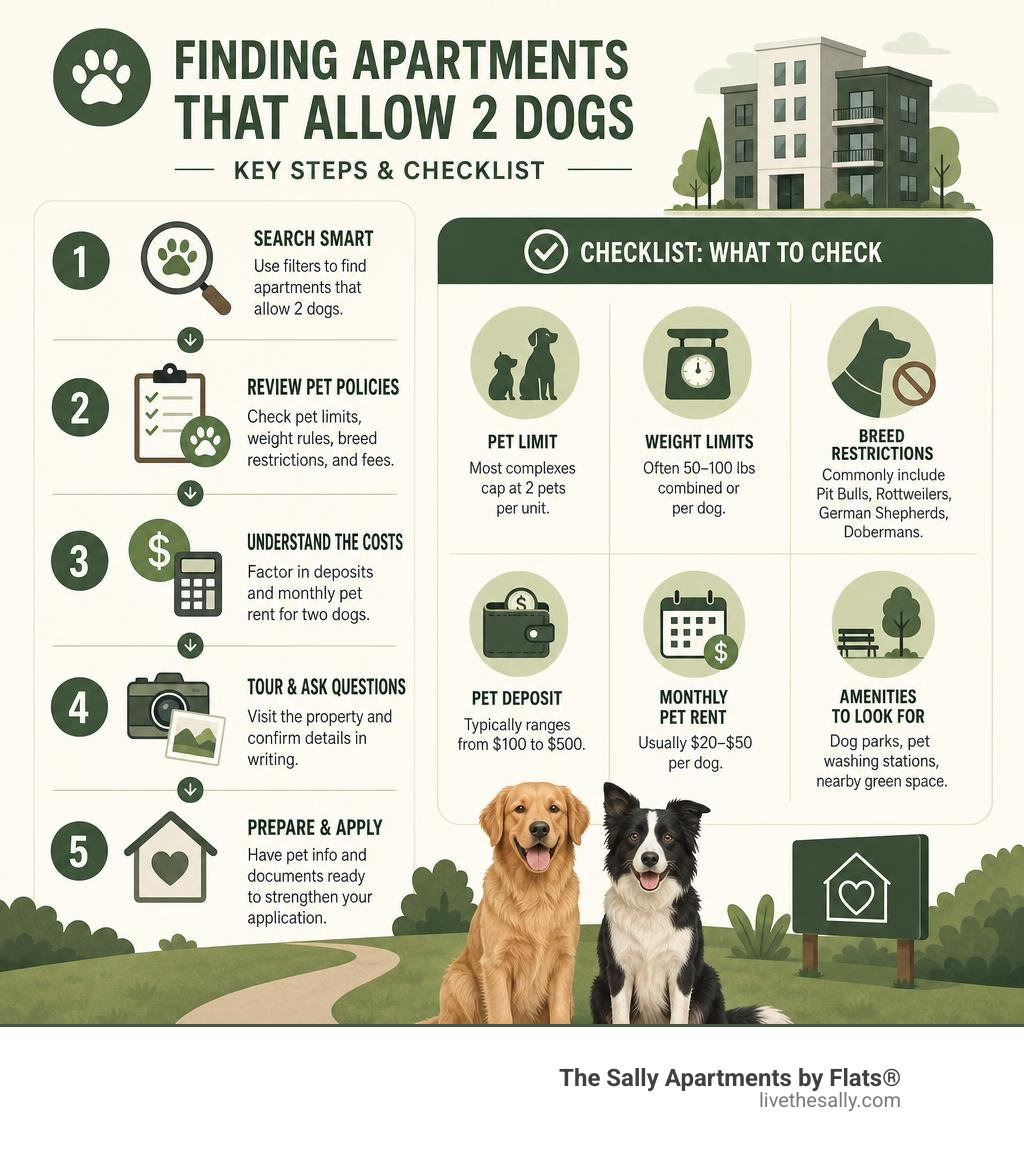
| Pet limit | Most complexes cap at 2 pets per unit |
| Weight limits | Often 50–100 lbs combined or per dog |
| Breed restrictions | Commonly include Pit Bulls, Rottweilers, German Shepherds, Dobermans |
| Pet deposit | Typically ranges from $100 to $500 |
| Monthly pet rent | Usually $20–$50 per dog |
| Amenities to look for | Dog parks, pet washing stations, nearby green space |
The good news? Thousands of pet-friendly rentals exist across the country. San Antonio alone lists over 1,700 pet-friendly options. Cities like Philadelphia, San Diego, and Salem, OR all have communities built with two-dog households in mind.
The challenge is that policies vary wildly — from combined weight caps to surprise breed lists to fees that stack up fast. Knowing the right steps before you search saves you from wasted applications and disappointing surprises.
This guide breaks down five foolproof ways to find the right home for you and both your dogs.
Way 1: Filter Listings Specifically for Apartments That Allow 2 Dogs
Finding a place to call home with a single pup can take a bit of searching, but finding apartments that allow 2 dogs requires a focused strategy. The most efficient starting point is applying precise search filters on digital rental platforms and property management sites before falling in love with a floor plan.
When navigating online search tools, selecting "Pet-Friendly" isn't always enough. A general filter might include properties that permit only a single feline or small dog. Look specifically for options that allow up to two pets per household. Many listing portals now feature advanced parameter toggles specifically for dog counts, letting you narrow your options down immediately. For more tips on navigating online listings effectively, check out our Pet Friendly Rentals Guide 2026.
Researching Regional Rules for Apartments That Allow 2 Dogs
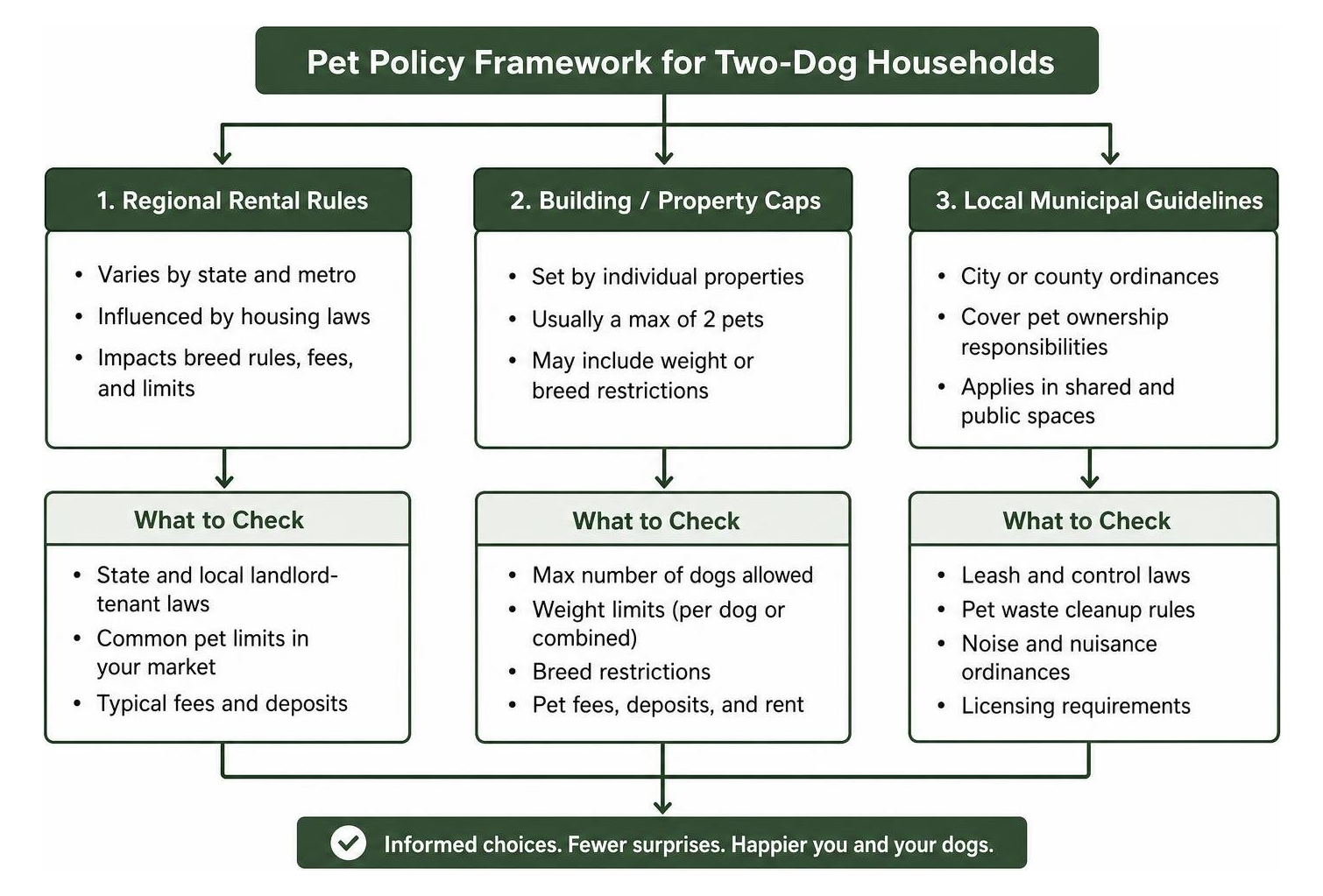
Local housing markets and city policies play a major role in how rental properties structure their pet policies. In urban areas like Chicago, building density and neighborhood layout directly influence how property managers handle two-pet limits.
Local municipal codes can dictate building-wide animal caps, waste management standards, and leashing rules in public spaces. In denser metropolitan neighborhoods, property managers often establish distinct guidelines for shared spaces, elevators, and outdoor courtyards to ensure every resident and pet enjoys a clean, peaceful environment.
Verifying Pet Occupancy Caps Before Applying
While online directory listings provide a fantastic foundation, directly verifying pet occupancy caps with property leasing teams before submitting an application is vital. Standard residential leases across major rental markets frequently maintain a firm cap of two pets per apartment unit.
When reviewing potential properties, ask the leasing office direct questions about their current caps:
- Does the two-pet cap apply strictly to dogs, or is it a combined limit for all household pets?
- Are both dogs permitted in every available unit, or only on designated pet-friendly floors?
- Does the building require a pet addendum signed concurrently with the standard residential lease?
Taking a few minutes to confirm these terms prevents unexpected application denials and protects your application fees. If you're currently seeking rentals tailored for dog owners, explore our guide on Apartments For Rent Dog Friendly.
Way 2: Evaluate Breed and Weight Restrictions Thoroughly
Finding apartments that allow 2 dogs involves looking far beyond pet headcount. Even communities that welcome two dogs often maintain guidelines regarding dog size, full-grown weight, and specific breed profiles. Reviewing these rules early prevents last-minute headaches. To learn more about navigating property rules, read our deep dive on No Breed Restrictions Apartments.
Managing Individual vs Combined Weight Limits for Apartments That Allow 2 Dogs
Weight limits come in two distinct formats: individual limits per dog and combined weight limits for both dogs together. Understanding the difference between these two structures is crucial when managing two canine family members.
Some properties enforce floor-level placement rules tied directly to dog weight. For instance, management might allow dogs over a certain size exclusively on ground-level or lower-floor units to minimize noise transfer to neighboring units below.
Navigating Breed Prohibitions
Prohibited breed lists are common across corporate multi-family properties, often tied to standard property insurance policies. Restricted list items frequently include breeds such as Pit Bulls, Rottweilers, German Shepherds, Doberman Pinschers, Chows, and Huskies, as well as mixed breeds containing those genetic traits.

To navigate breed guidelines successfully:
- Review official documentation: Ask for the complete written list of prohibited breeds before touring or applying.
- Obtain veterinary confirmation: Ask your veterinarian for a health certificate listing your dog's primary breed breakdown and up-to-date weight.
- Inquire about temperament checks: Certain communities conduct friendly "doggie interviews" where property managers evaluate a pet's social behavior and temperament rather than relying solely on breed labels.
Way 3: Calculate the Total Cost of Pet Rent, Fees, and Deposits
Calculating the overall costs for apartments that allow 2 dogs involves understanding how pet-related expenses are structured. Rather than a single uniform cost, pet fees are typically split into initial deposits, one-time fees, and monthly recurring rent charges.

Understanding Refundable vs Non-Refundable Pet Fees
Initial financial obligations for pets generally fall into two categories:
- Refundable Pet Deposits: Funds held in escrow to cover potential physical damages to the unit during your lease term. If your dogs leave the apartment spotless, this deposit is returned to you upon move-out.
- Non-Refundable Pet Fees: One-time move-in or administrative fees assessed by the management company to cover initial processing, carpet cleaning, or communal facility upkeep. These funds are non-refundable regardless of apartment condition.
Before signing your lease agreement, ask management to itemize every initial fee clearly. Check out our comprehensive Apartment Pet Friendly Guide 2026 for further details on lease agreement breakdowns.
Comparing Monthly Pet Rent Models
Monthly pet rent is standard practice in contemporary apartment living. Properties generally adopt one of two recurring fee models:
- Per-Pet Rent Model: A separate monthly charge assessed for each individual dog living in the apartment. Having two dogs under this model means paying double the single-pet monthly fee.
- Flat Household Rent Model: A single fixed monthly pet fee charged to the apartment unit as a whole, regardless of whether you house one dog or two.
Clarifying whether pet rent is assessed per animal or per household helps you calculate your true recurring monthly living costs accurately.
Way 4: Look for On-Site Pet Amenities
When living with two active dogs, on-site building amenities transform daily routines from exhausting chores into convenient, enjoyable experiences. Modern residential developments are increasingly designed around pet care needs, making life effortless for two-dog households. For an insider look at top-tier residential offerings, browse our selection of Pet Friendly Luxury Apartments Best.
At The Sally Apartments in Uptown Chicago, we design our residential spaces with pet comfort in mind. Featuring an on-site dog run and a dedicated pet spa, our community gives your pets space to exercise, play, and stay clean without ever leaving the property grounds.
Evaluating On-Site Dog Runs and Grooming Facilities
Having immediate access to dedicated outdoor dog runs and professional-grade pet spas right inside your building saves immense time, especially during cold winters or rainy mornings.
| Feature | On-Site Dog Parks & Runs | Dedicated Pet Spas & Grooming Stations |
|---|---|---|
| Primary Function | Daily off-leash exercise and social play | Washing, drying, and grooming after outdoor walks |
| Key Benefits | Safe enclosed areas close to your front door | Keeps dirt, bath splashes, and loose fur out of your apartment |
| Convenience Factor | Eliminates long walks to neighborhood parks in bad weather | Features elevated washing tubs, flexible spray hoses, and blow dryers |
| Community Impact | Encourages social interaction between resident dogs | Maintains clean common hallways and unit interiors |
Having both options under one roof makes managing the grooming and exercise schedules of two dogs vastly simpler.
Way 5: Prepare a Complete Pet Resume and References
When applying for apartments that allow 2 dogs, standing out as a conscientious, organized tenant can make all the difference. Presenting a complete pet resume directly to leasing agents demonstrates responsibility and respect for the rental community.
A comprehensive pet packet should include:
- High-Quality Photos: Clean, clear pictures showing both dogs looking friendly and well-groomed.
- Veterinary Records: Complete vaccination histories, spay/neuter confirmation, microchip details, and current weight records from your veterinarian.
- Landlord Reference Letters: Written statements from prior landlords confirming that your dogs were quiet, well-mannered, and caused zero damage to previous rental homes. For more advice on gathering documentation, see our Pet Friendly Rental Units Guide.
- Training Certificates: Proof of completed obedience training classes, Canine Good Citizen (CGC) credentials, or formal behavioral certifications.
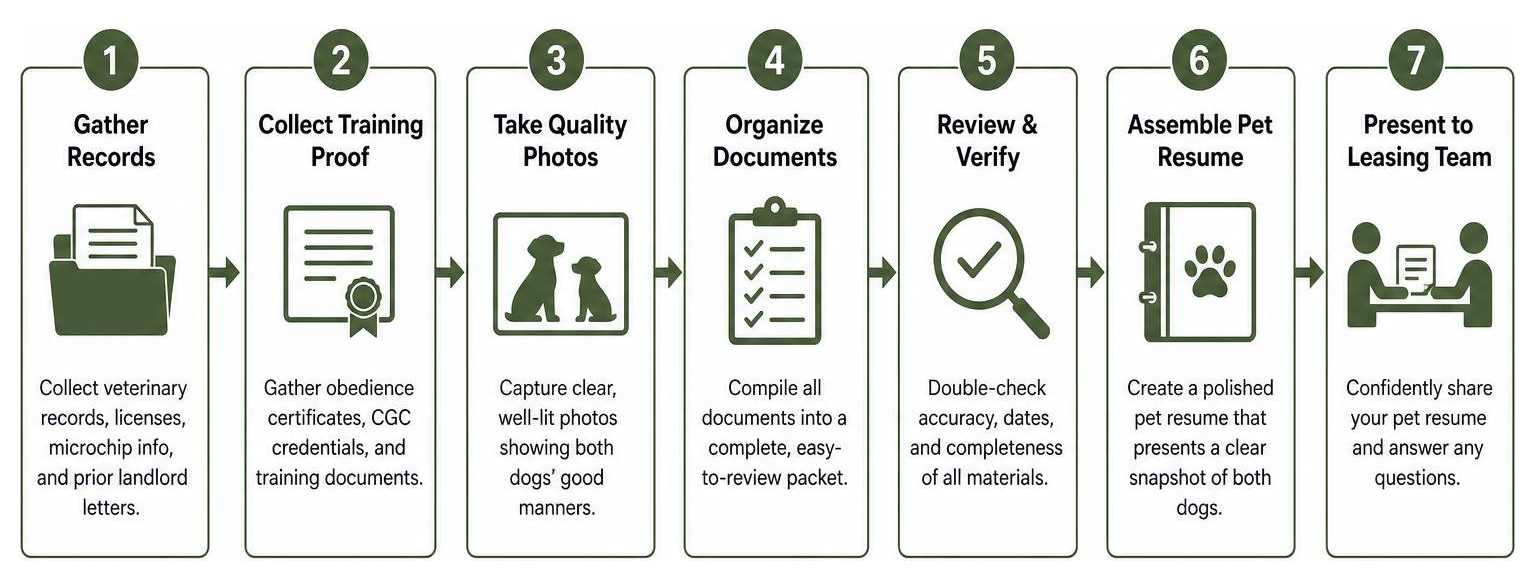
Providing organized documentation upfront builds immediate trust with leasing officers and streamlines your lease approval process.
Frequently Asked Questions About Pet Policies
What is the average pet deposit for two dogs?
Initial pet deposits for two-dog apartments vary depending on property guidelines and management policies. In typical rental markets, initial deposits generally range between $100 and $500 total. Some properties charge a flat per-unit deposit, while others assess a deposit per individual pet. Confirming whether deposits are refundable helps you plan your move-in expenses accurately.
Are emotional support animals exempt from pet rent?
Under federal Fair Housing Act regulations, legitimate Assistance Animals—which include trained Service Animals and Emotional Support Animals (ESAs)—are evaluated under reasonable accommodation rules rather than standard pet policies. When proper legal documentation from a licensed healthcare professional is submitted and approved by property management, ESAs are exempt from monthly pet rent, initial pet deposits, and standard pet size or breed restrictions. However, tenants remain responsible for any physical damage caused to the apartment unit.
Which dog breeds are most commonly restricted in rental leases?
Restricted breed lists are generally established by real estate management companies based on standard commercial property insurance guidelines. The most commonly restricted or banned breeds in rental leases include:
- Pit Bull Terriers (including American Staffordshire Terriers and Staffordshire Bull Terriers)
- Rottweilers
- German Shepherds
- Doberman Pinschers
- Chows
- Siberian Huskies and Alaskan Malamutes
- Presa Canarios and Akitas
- Any mixed-breed dogs containing primary traits of these restricted breeds
Always request a written list of prohibited breeds directly from the leasing office before submitting paid rental applications.
Conclusion
Finding apartments that allow 2 dogs comes down to preparation, clear communication, and knowing what to look for in a lease. By using targeted search filters, evaluating weight and breed policies early, calculating total pet fee structures, prioritizing building amenities, and preparing a complete pet application packet, you can secure a apartment home where both you and your dogs thrive.
Ready to find your next home in Chicago? We welcome dogs warmly and offer premier pet amenities, including an enclosed dog run, pet spa facilities, and in-unit laundry. Explore Pet Friendly Chicago Apartments with us at The Sally Apartments by FLATS today!